Clarksville, Tennessee
Termite control in Clarksville, Tennessee
Termite damage moves slowly, so you have time to do this properly. Call to reach an independent pest control company, ask for an inspection, and ask to be shown what they find.
How to recognise termites
UT Extension calls subterranean termites the most destructive wood-feeding insects in Tennessee. The workers doing the damage are soft, white and seldom seen. These are the signs people usually do see:
- Winged swarmers around windows and doors, usually black with a straight body and straight antennae.
- Shed wings on a sill or floor after a warm day that followed rain.
- Mud tubes about as wide as a pencil on foundation walls, piers or joists.
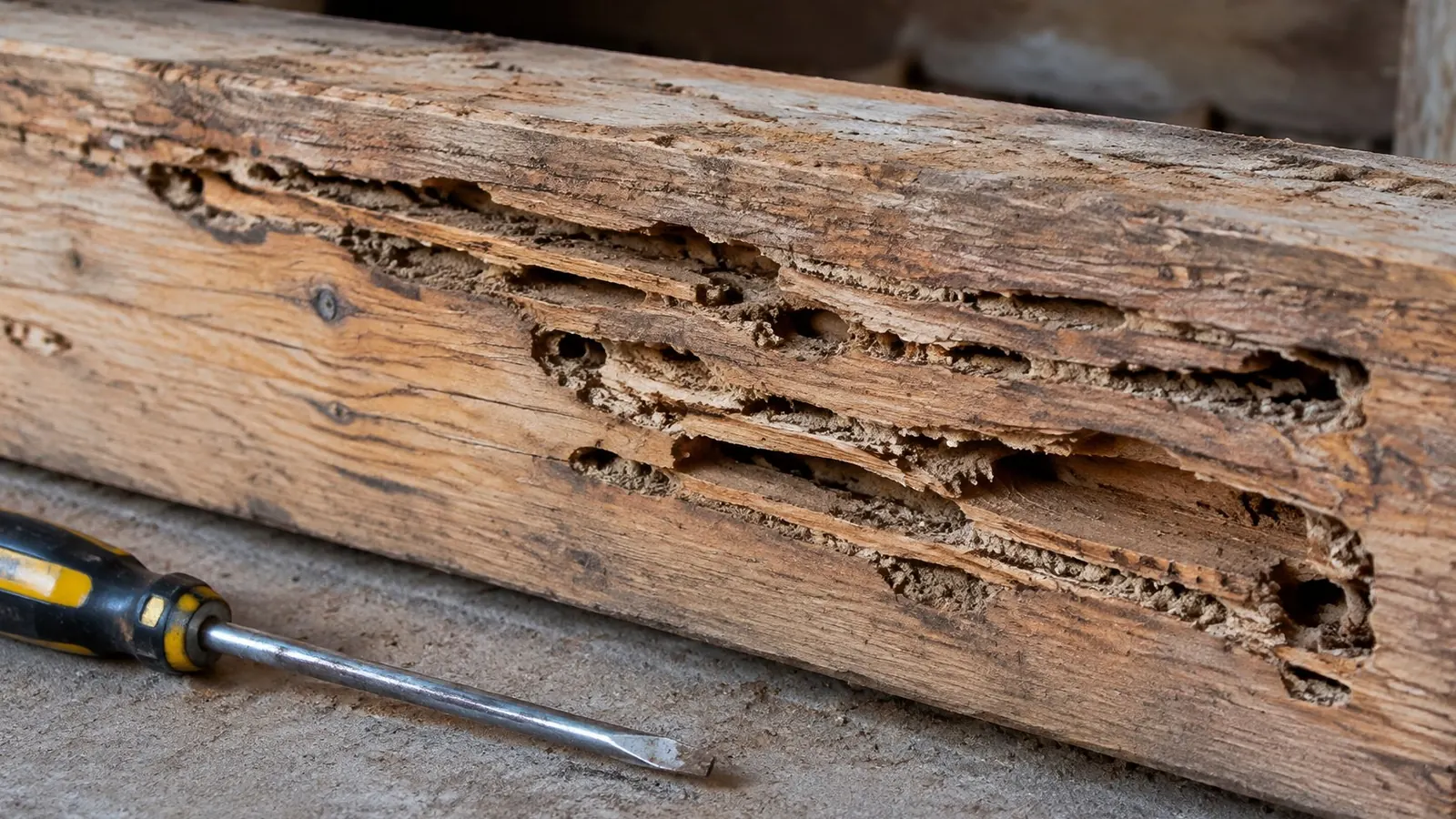
- Wood eaten along the soft grain, leaving a thin outer shell and bits of soil inside the layers.
Winged ants get mistaken for termites all the time. An ant has a pinched waist, bent antennae and hind wings shorter than the front pair. A termite has a broad waist, straight antennae and four wings of equal length. If you can, keep a few swarmers in a jar for the inspector to look at.
Why they show up around Clarksville
The three common species in Tennessee live in the soil and need it for moisture, which is why they enter a house where wood or a foundation wall sits next to the ground. On slab houses they come through expansion joints, cracks and the openings around pipes.
The flights run through much of the year here. UT Extension puts the eastern subterranean termite at March to May, the southeastern species at April to June or in the fall, and the paler one at August to October. Swarmers indoors rarely start a colony. What they tell you is that a colony is already close by.
A crawl space adds risk when it stays damp. Good ventilation and a plastic ground cover help keep the soil under the house dry, and firewood or scrap lumber stacked against the foundation gives termites an easy start.
What a termite visit usually involves
Inspection
Someone checks the foundation, crawl space, slab joints, porches and often the attic for tubes, wings and damaged wood, probing the wood with a screwdriver.
Being shown the evidence
The Tennessee Department of Agriculture tells homeowners to ask to be shown the damage and to verify termites are present before signing.
Choosing a method
The two broad options are a liquid soil treatment and a baiting system. They work differently, so ask the company to explain which it suggests for your house and why.
A written contract
Tennessee rules require a written contract before treatment, with a graph of the property and a one-year retreatment warranty. Our termite contract guide goes through the rest.
When to call
Call if you find swarmers inside, mud tubes on the house, or wood that sounds hollow. A swarm from a stump out in the yard doesn't by itself mean the house is infested, but swarmers next to the foundation or coming up through a porch are worth an inspection.
There is no need to sign anything on the first day. University of Kentucky entomologists make the same point: termites damage wood slowly, and a few extra days to compare companies makes little difference. Be wary of pressure to sign on the spot. Buying a house? Read about the Tennessee termite report.
Termite questions
Can I wait until spring to deal with termites?
You can take time to compare companies. A confirmed infestation won't clear up by waiting, though, so don't put it off for months.
Do I need the whole house treated?
That is a question for the inspection. Spot treatments are often a gamble because a colony forages in many directions, and many companies won't back them with a warranty. A partial treatment in Tennessee must be noted in bold in the contract and initialed by you.
Termites in your home?
Call and you'll be connected with an independent pest control company in the Clarksville area.
Calls answered: early morning to late evening